
Overview
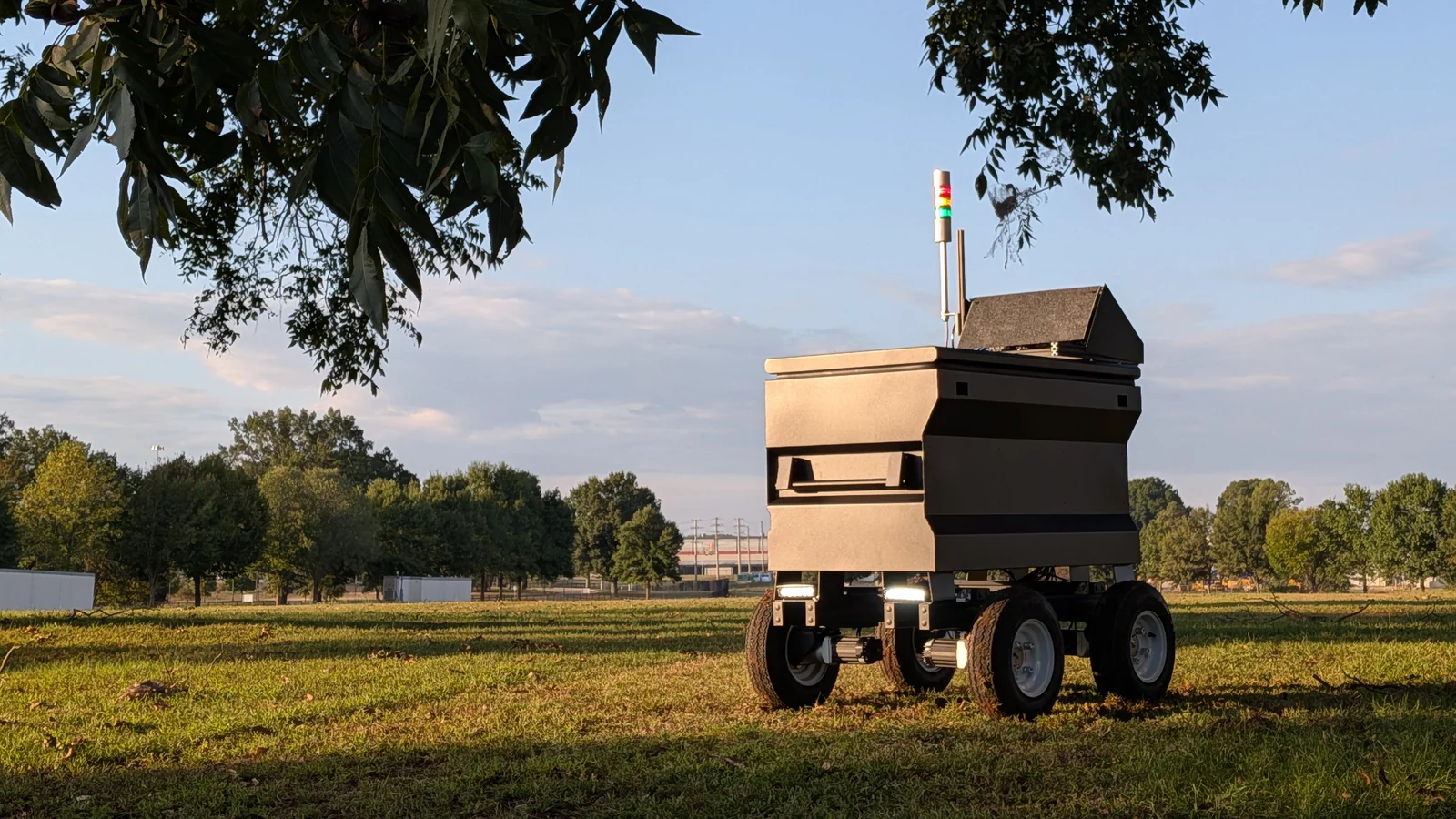
SpaceFactory is developing an all-electric autonomous logistics vehicle under a U.S. Air Force Small Business Innovation Research (SBIR) Direct-to-Phase II contract. Designed for flightline operations, the vehicle aims to transport tools, equipment, and supplies while navigating GPS-denied and RF-constrained environments with limited active sensing.
The project aims to improve the efficiency of aircraft maintenance support by reducing routine transportation tasks for maintenance personnel, allowing them to focus on aircraft readiness.
Designed for austere environmental conditions and a low electromagnetic signature consistent with Hazards of Electromagnetic Radiation to Ordnance (HERO) requirements, the vehicle is being developed specifically for operational security in demanding flightline environments.
System architecture
A central technical challenge is achieving reliable autonomous navigation in GPS-denied and RF-constrained environments, with limited reliance on active sensing, cameras, or other visual navigation systems due to security restrictions on active flightlines. In the absence of vision-based simultaneous localization and mapping (SLAM), the F-MAV combines inertial navigation and sensor fusion to limit drift within acceptable limits.
The vehicle will employ teach-and-repeat route programming, allowing it to operate along predefined routes without relying on conventional GPS-based navigation or continuous external communications.
Payload and operator interface
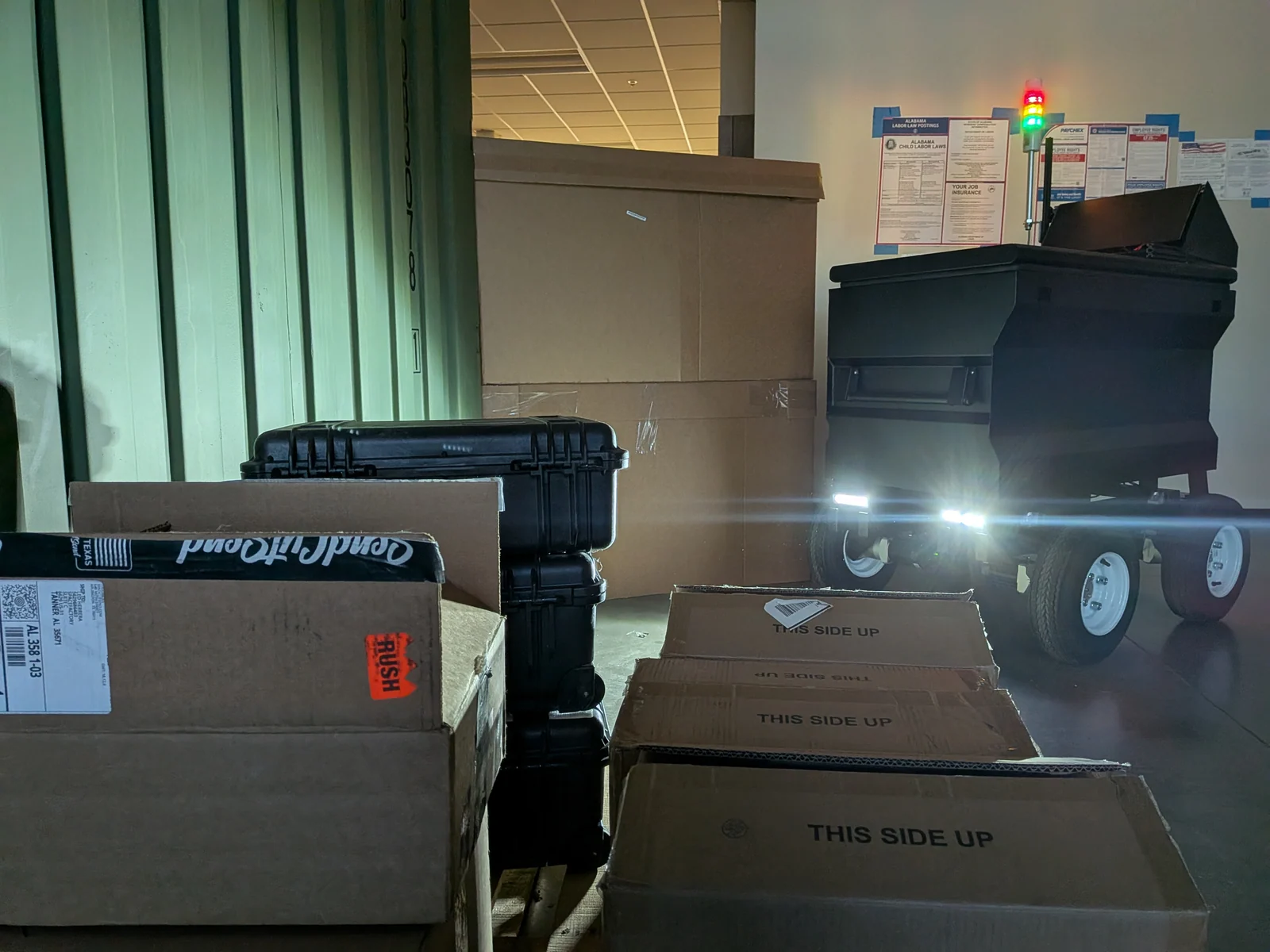
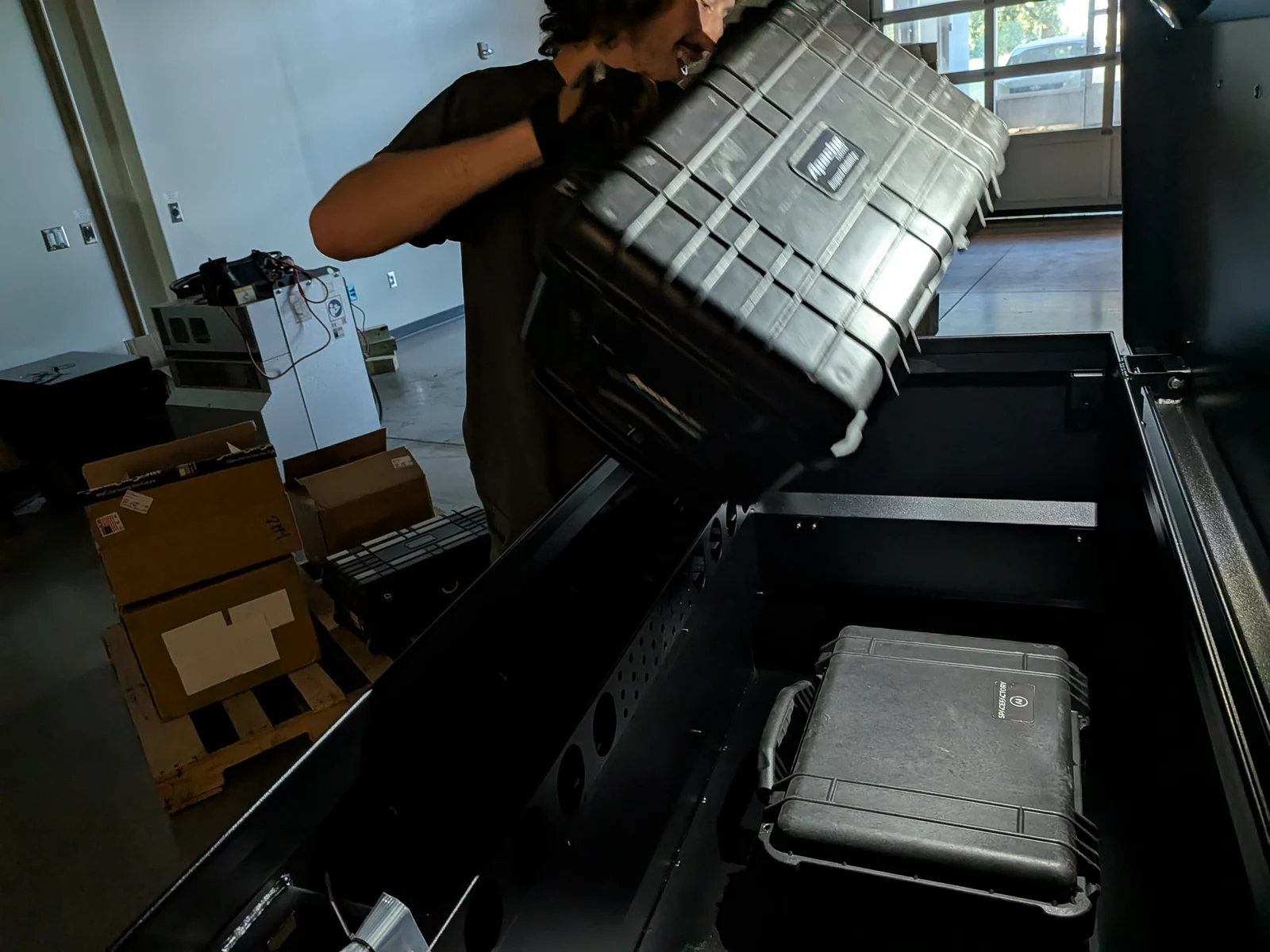
The all-electric vehicle is being developed to transport payloads of at least 300 pounds over a range of 20 miles or more on a single charge. Its design emphasizes ease of use in demanding flightline environments.
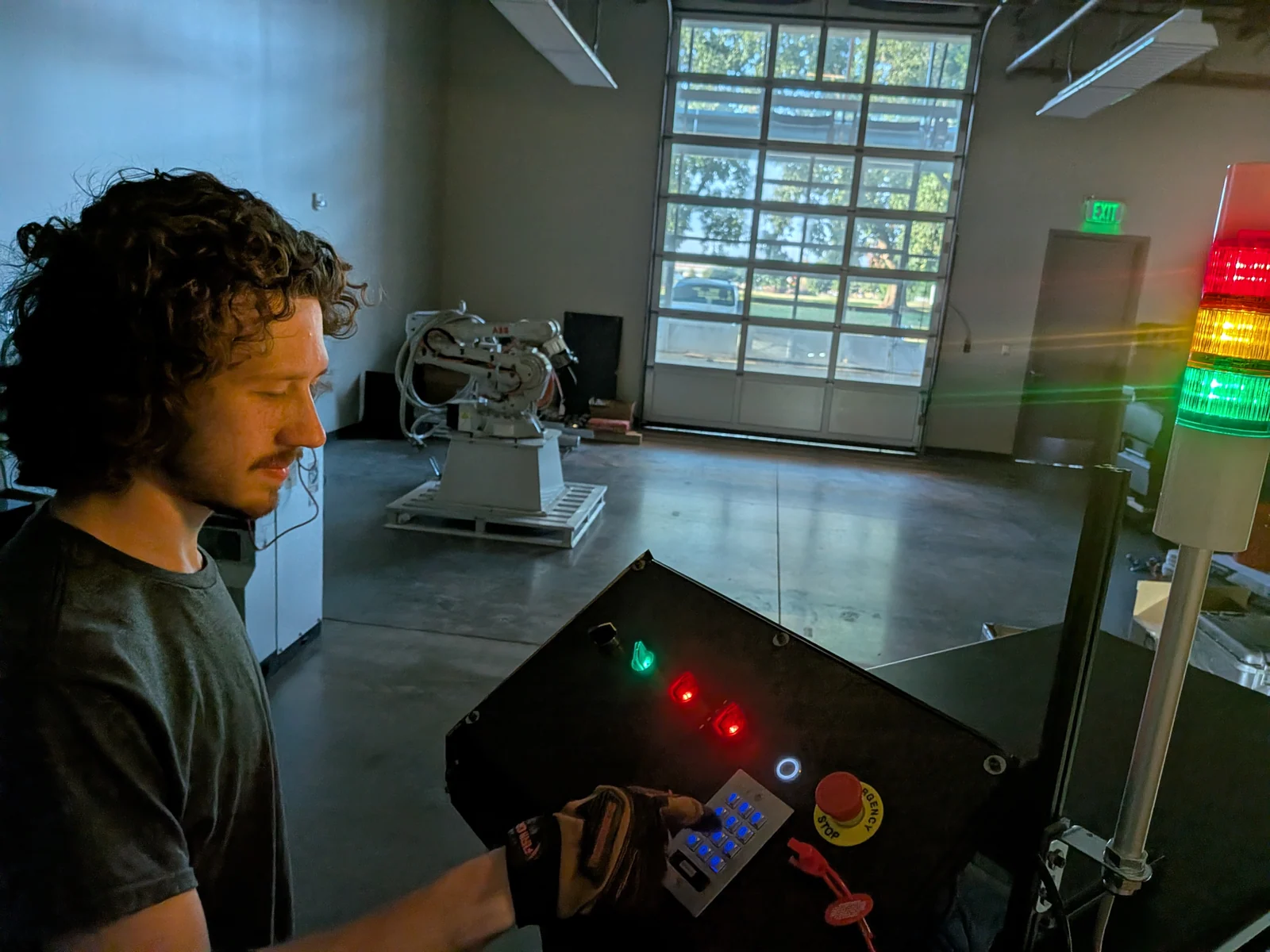
Designed as a “toolbox on wheels,” the vehicle autonomously transports tools and equipment to support aircraft maintenance. Its simple, robust user interface is designed for secure send-and-forget dispatch. The vehicle is engineered for all-weather operations, including exposure to salt fog and blowing rain.
Prototype development and testing
Under the contract, SpaceFactory will design, build, demonstrate, and deliver a prototype autonomous logistics vehicle to the U.S. Air Force by mid-2027. The development program will include testing for environmental ruggedness, electromagnetic compatibility, and ease of use.
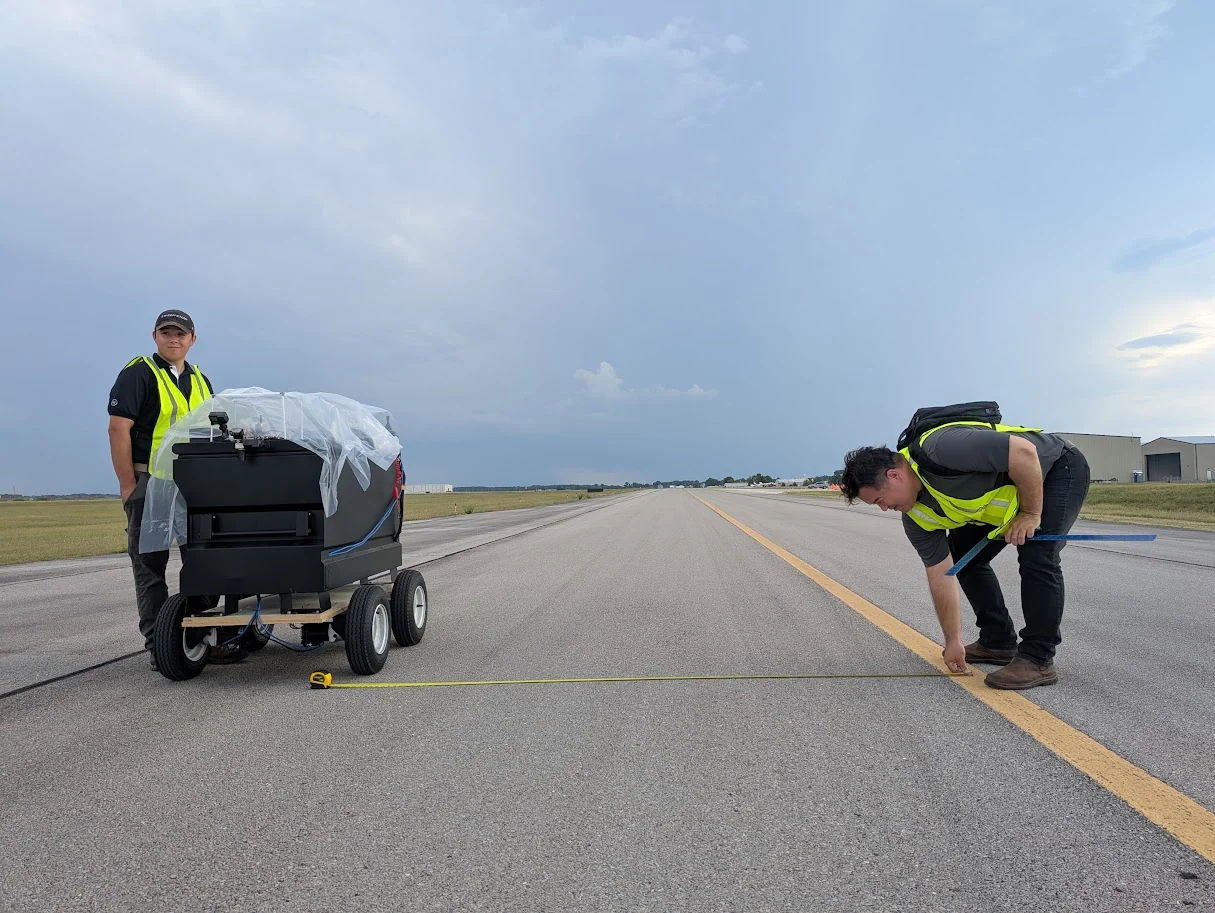
SpaceFactory has conducted preliminary prototype testing at Pryor Field Regional Airport in North Alabama. This initial work evaluated the vehicle’s inertial navigation system and benchmarked navigational drift measurements within acceptable limits. The development program includes electromagnetic interference and compatibility (EMI/EMC) qualification and environmental testing to validate the vehicle's suitability for demanding flightline operations.
Applications and next steps
SpaceFactory is exploring additional capabilities, including foreign object debris (FOD) detection and removal, as well as automated pavement condition inspection (PCI) for applications at both military and civilian airfields.
Beyond flightline applications, the technology has potential uses in construction, industrial logistics, and other environments where autonomous last-mile delivery can improve productivity, safety, and efficiency. The program received the support of several Huntsville-area construction companies with plans for a commercial construction variant following completion of the primary U.S. Air Force objectives.
The program anticipates prototype delivery to the U.S. Air Force by mid-2027 while exploring future dual-use variants for commercial and industrial applications.